
Article coming soon. The preview below outlines what will be covered when complete.
What to expect
Most people buy things reactively — they see something, want it, and either buy it immediately or forget about it. The Things collection introduces intentional distance between wanting and buying. Every item goes into the database first. Then you decide. The result is a catalog of everything you’re considering, organized by category, with a status that moves from idea to purchased. It also creates something genuinely useful over time: a searchable record of what you’ve bought, what you’re watching, and what you’ve decided to skip.What will be covered
Friction as a feature. The database is a waiting room. Nothing major moves to “purchased” without passing through the list first. That pause is the point. We’ll cover how this changes your relationship with spending — not by adding rules, but by adding context. The Idea bank. Just like in the Projects collection, the Idea bank status is a holding container. It captures the “I want this” moment without committing to a purchase. Sometimes items sit there for months and get dropped. Sometimes you realize you’ve been meaning to buy something for a year and it’s time. Either way, the idea isn’t lost. Using pages for research. Each entry can be a generic category (“noise-canceling headphones”) or a specific item with make and model. The page itself is where research lives — comparison notes, links, specs, pros and cons. By the time you’re ready to buy, the work is done. Shopping with intention over time. The list doubles as a deal-watch tool. When Black Friday arrives, you’re not browsing blindly — you already know what you’re looking for. When a mid-year sale appears, you can check it against your list in seconds. Prioritization in context. Alongside Projects, Books, and Opinions the Things collection is a space where prioritization is explicit which leads to better decisions when it comes to intentional spending especially on those QoL (Quality of Life) purchases.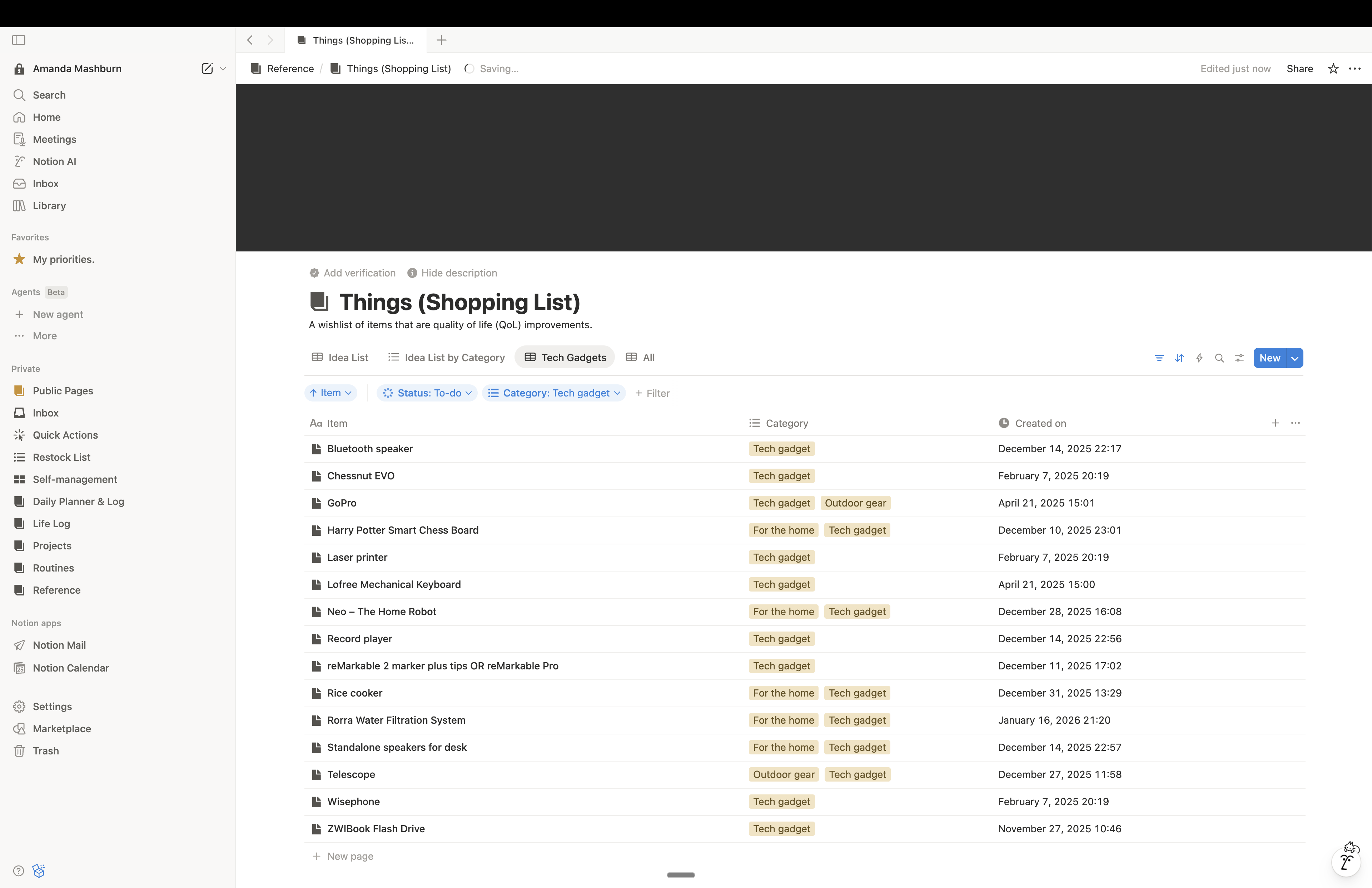 Fig. 01 – A peek into my personal Things database in Notion.
Last update: 2026.04.26