
Article coming soon. The preview below outlines what will be covered when complete.
What to expect
A space to articulate and reference your personal value system. The Core Principles collection is a database of guiding statements – principles, aphorisms, and mental models – each with room to elaborate on the reasoning and context behind it. It’s a living document of how you’ve decided to operate.What will be covered
What a principle is – and isn’t. A principle is not a vague aspiration. It’s a statement precise enough to apply to a specific decision. We’ll cover how to write principles in a form that’s useful: imperative, actionable, and specific enough to test against a real situation. How this fits alongside Knowledge Bank and Opinion Bank. The three collections represent a deliberate split: what you know (Knowledge Bank), what you think (Opinion Bank), and what you believe (Core Principles). Understanding the difference between a fact, an opinion, and a value is one of the clearest thinking skills you can develop – and building all three collections forces you to practice it. How principles crystallize. Principles rarely arrive fully formed. They emerge from experience, reading, hard decisions, and reflection. We’ll cover how to capture them in the moment and how to refine them over time. Using principles as a decision reference. The value of writing principles down is that you can return to them. We’ll cover how to build the habit of consulting your principles when you’re facing trade-offs or evaluating commitments.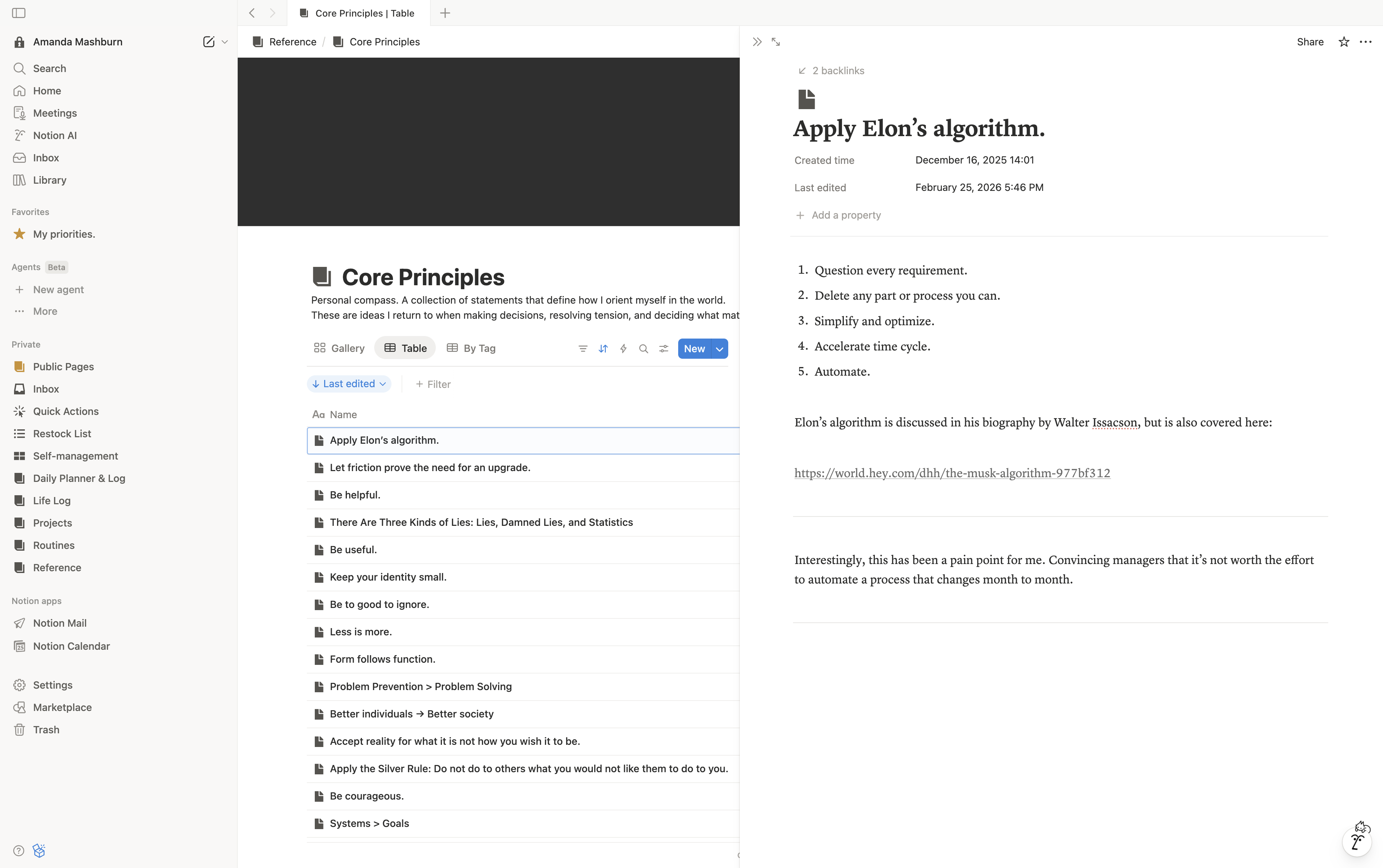 Fig. 01 – A peek into my personal Core Principles database in Notion.
Last update: 2026.04.26