
Article coming soon. The preview below outlines what will be covered when complete.
What to expect
There is no Tasks collection in the Extended Mind System – only a Projects collection. Everything – no matter how small – is a project. A single errand is a project. A phone call is a project. A years-long business initiative is a project. At its core, a project is just a collection of tasks, and when you start seeing things that way, the artificial distinction between “task” and “project” collapses. What you’re left with is one list, one system, and one place to put everything that requires action.What will be covered
What counts as a project. The distinction between a task and a project matters more than it seems. If it takes more than one action to complete, it belongs here. We’ll cover how to think about scope before you start, and why that changes what you commit to. The project lifecycle. Status moves from Idea bank → Queue → In progress → Closed. Each stage has a purpose. The Idea bank in particular does heavy lifting: it captures projects before you’re ready to act on them, gets the thought out of your head, and preserves everything you’ve researched or noted along the way – without cluttering your active list. Projects as containers. Every project page is a place to accumulate. Links, notes, research, half-formed thoughts – anything related to a project has a home. Nothing gets lost. You can drop something in and trust it’ll be there when you’re ready. Prioritization in context. The Projects list, viewed in full, puts every potential commitment in context with everything else you could do. That context is what makes real prioritization possible. We’ll cover how to use the list to make better decisions about what to take on and when. Tag-based views. Projects are tagged by domain (Admin, Operations, Errands, Learning, etc.) so you can filter to a specific area of life at a glance. We’ll cover how to structure tags and which views are worth building.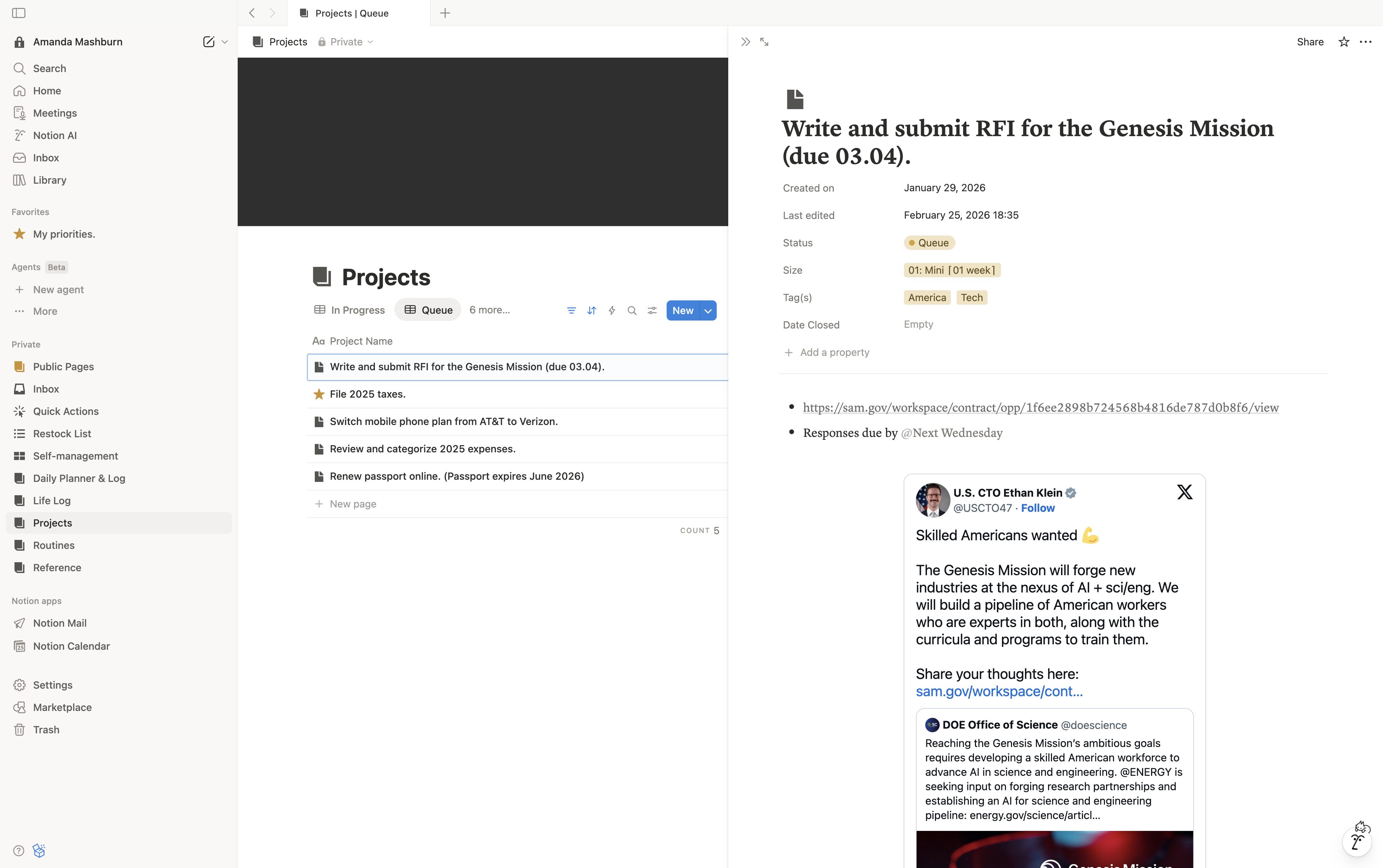 Fig. 01 – A peek into my personal Projects database in Notion.
Last update: 2026.04.26