
Article coming soon. The preview below outlines what will be covered when complete.
What to expect
Some work repeats. Not every day, but on a cadence – weekly, monthly, seasonally, annually. The Routines collection is where that work lives. Instead of rebuilding the same checklist from scratch each time or relying on memory to know what needs to happen when, each routine is a reusable page with a defined frequency. When it’s time, you create a new instance and work through it.What will be covered
Why routines and projects are separate. Both are collections of tasks, but they operate on fundamentally different logic. Routines are ongoing and repeat at regular frequencies – they get handled before projects do. Projects have a defined end point and a specific outcome. When a project closes, those hours open up for the next one. A routine never closes that way. It just comes back around. Keeping them in separate collections reflects that distinction and helps you better allocate your time. Instances vs. templates. The template defines what the routine contains; the instance is a record of a specific run. When it’s time to do your weekly review, you create a new instance from the template, work through it, and close it when done. The template stays intact for next time. What routines actually look like. We’ll walk through real examples: the weekly review, the weekly prep, seasonal checklists (spring cleaning, winter prep), and holiday-specific routines (Thanksgiving, Christmas, New Year’s). The closed routines log. Every completed routine instance is closed with a date, creating a historical record of what was done and when. Integration with the Daily Planner & Log. Routines and daily planning work together. We’ll cover how to connect routine execution to your daily workflow so nothing falls through the cracks.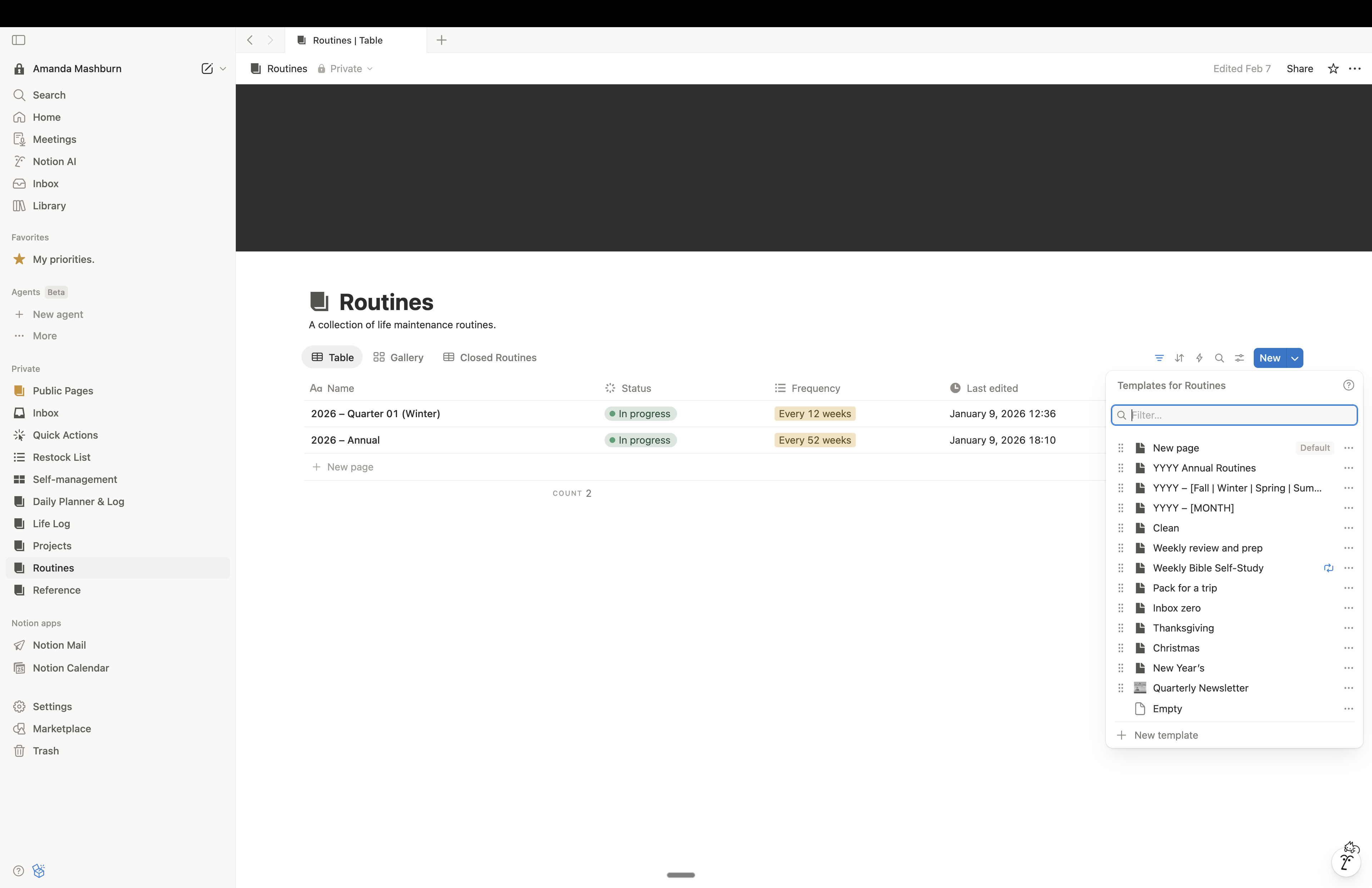 Fig. 01 – A peek into my personal Routines database in Notion.
Last update: 2026.04.26