
Article coming soon. The preview below outlines what will be covered when complete.
What to expect
A reading list is where books go to be forgotten. A library catalog is a different thing entirely – it’s a durable, searchable record of everything you own, have read, are reading, and want to read, with enough metadata to make it genuinely useful over time. The Books & Papers collection is one of the few that breaks away from the preference for minimal metadata.What will be covered
Format ownership vs. reading status. These are two separate things, and most reading trackers conflate them. You can own a book in three formats and be listening to the audiobook while the hardcover sits on a shelf. Consolidating format and reading status gives you an accurate picture of your library and reading habits. Realistic reading status options. The status field doesn’t force a binary read/unread. It reflects how people actually engage with books, which makes the database accurate rather than aspirational. Bibliographic metadata. Author, publisher, year, ISBN-10, ISBN-13, page count, description, and a link. Both ISBN formats are captured separately – a detail most reading trackers skip entirely. This level of metadata makes the database useful for reordering, gifting, and referencing years later. Papers alongside books. The collection is not books-only. Academic papers are included as a type, making it a unified reading database rather than two separate systems. If it’s something you read, it belongs here. Reading lists do not have have to be limited to books and papers. Types can be expanded to even include podcasts, documentaries, and YouTube videos as well. Ratings and patterns over time. A 1–5 star rating attached to each read entry creates a curated record of what you’ve found valuable. Over time, filtering by rating and tag reveals patterns in what you actually find worth reading – not what you thought you’d enjoy, but what you did. Prioritization. Like other collections, the database encourages prioritization. The TBR (to be read) and Queue views put your reading backlog in full view. You cannot read everything. The list helps you decide what’s worth reading amongst the options.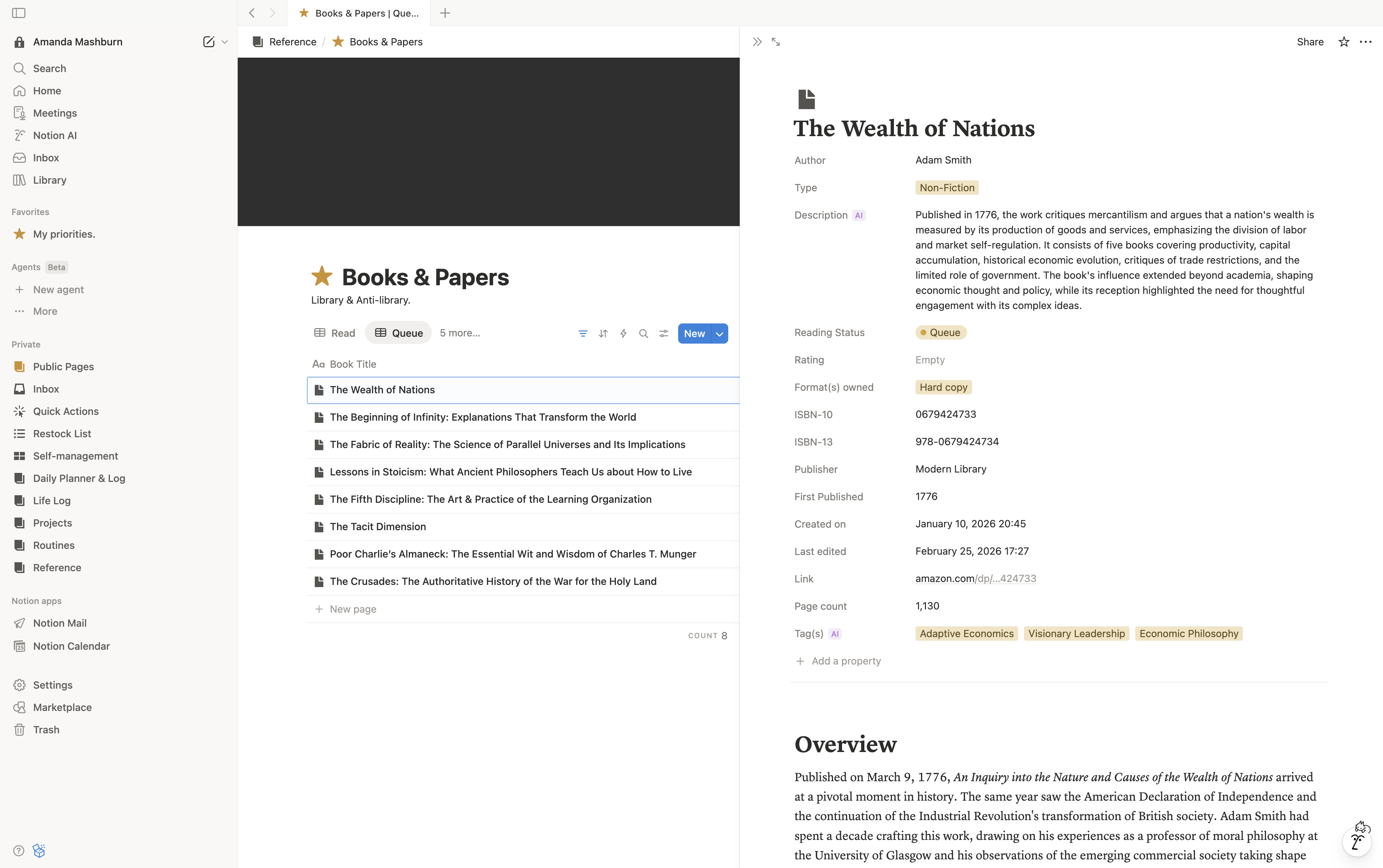 Fig. 01 – A peek into my personal Books & Papers database in Notion.
Last update: 2026.04.26